Momofuku Bossam (Korean Slow Cooked Pork Shoulder Roast) Recipe
Introduction
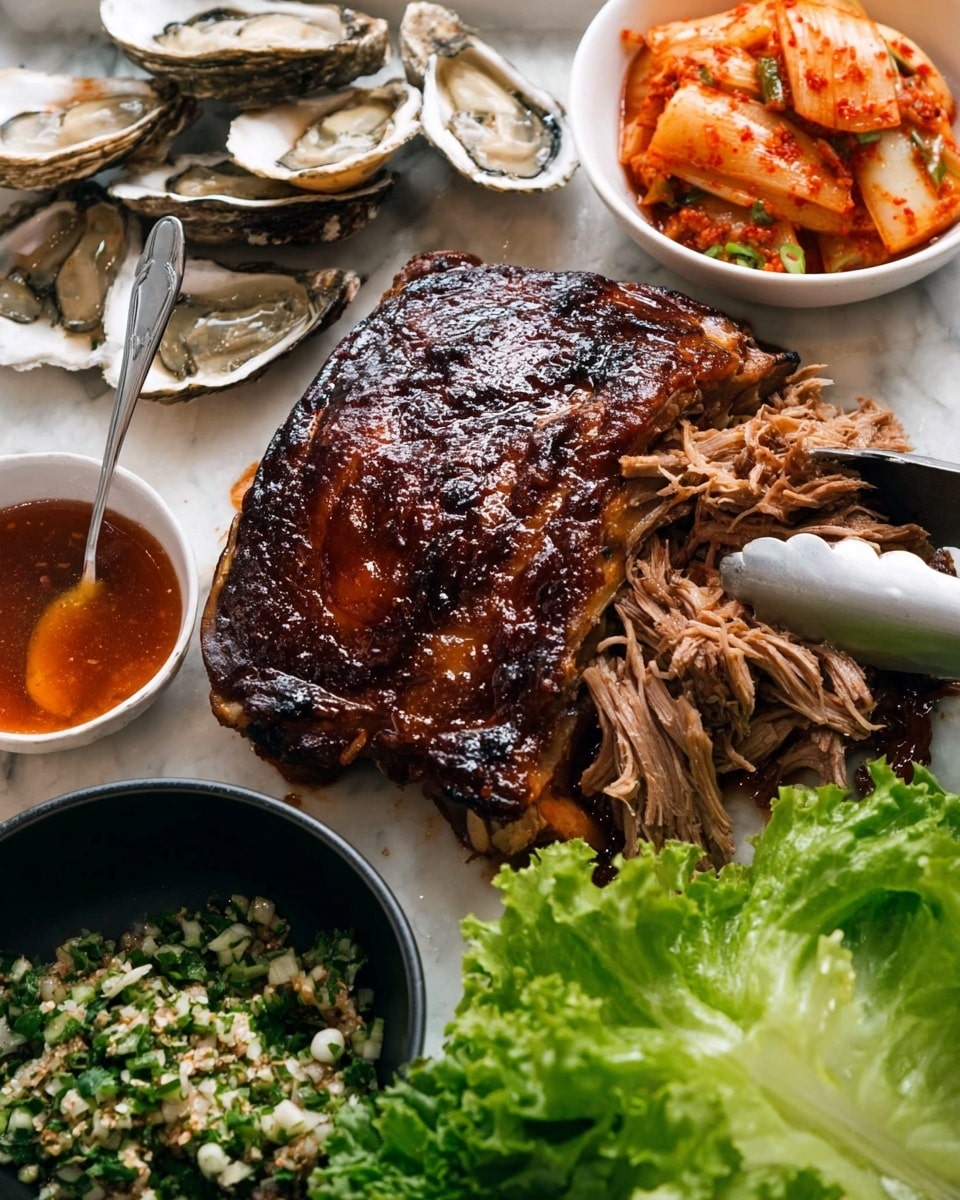
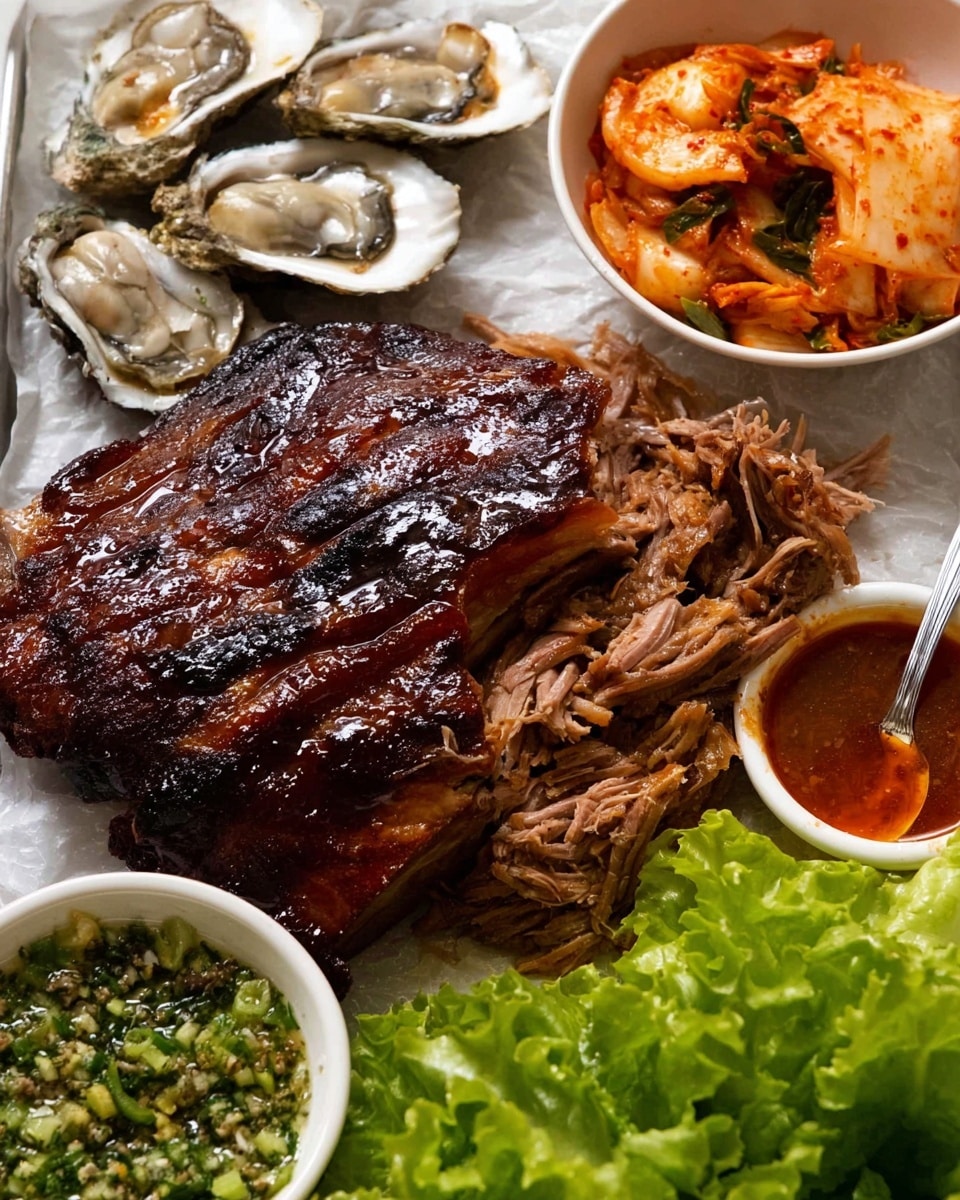
Momofuku Bossam is a succulent Korean slow-cooked pork shoulder roast, famous for its tender texture and flavorful caramelized crust. This comforting dish pairs beautifully with fresh lettuce, kimchi, and a variety of sauces, making it perfect for sharing at a casual gathering or family meal.
Ingredients
- 3.5-4 kg (7-8 lb) pork butt/shoulder, bone-in and skinless
- 1/2 cup (110g) white sugar
- 1/2 cup (115g) kosher or cooking salt (not table salt)
- 1 tbsp kosher or cooking salt (not table salt)
- 7 tbsp light or normal brown sugar (not dark)
- 2.5 cups scallions, thinly sliced (both green and white parts, about 5-6 stems)
- 1/2 cup fresh ginger, peeled and finely grated
- 1/3 cup canola oil
- 1.5 tsp light soy sauce (or all-purpose, not dark soy sauce)
- 1 tsp sherry vinegar
- 1/2 tsp kosher or cooking salt, to taste
- 2 tbsp ssamjang
- 1 tbsp gochujang
- 5 tsp sherry vinegar
- 2 tbsp canola oil
- 1 tbsp water
- 1 tsp white sugar
- 4-5 heads butter or bib lettuce (40-50+ leaves)
- 3 cups cooked white rice
- 500g (1 lb) kimchi
- 12+ raw oysters in shell (optional)
Instructions
- Step 1: Mix the white sugar and 1/2 cup kosher salt together. Pat the pork dry and coat it thoroughly with this sugar-salt mixture, making sure to get into all crevices. Rub well, then discard any excess salt that falls off (usually about 2-3 tbsp).
- Step 2: Place the pork in a glass dish, cover loosely with cling wrap, and refrigerate for 24 to 36 hours to brine.
- Step 3: Preheat your oven to 150°C (300°F) with the rack positioned in the middle.
- Step 4: Remove the pork from the fridge; the surface will be wet. Transfer the pork to a clean roasting pan or drain excess liquid and scrape off remaining salt from the original dish. Do not rinse the pork.
- Step 5: Roast the pork uncovered for 5 hours, spooning pan juices over it every hour. The pork is done when it easily pulls apart with two forks.
- Step 6: Remove the pork from the oven and let it rest for 10 minutes, up to 1 hour if needed, loosely covered with foil.
- Step 7: Increase the oven temperature to 260°C (500°F).
- Step 8: For the crust, mix the brown sugar and 1 tbsp kosher salt. Spoon the pan juices over the pork, then press the sugar mixture evenly onto the top and sides (avoid the bottom) to form a caramelizing layer.
- Step 9: Roast the pork at high heat for 10 minutes until the sugar melts and forms a deep golden crust. Watch closely after 5 minutes to prevent burning. Cover with a small piece of foil if it starts to blacken.
- Step 10: Remove pork from oven and transfer to a serving platter. Do not use the pan juices for serving as they will be too salty from the brine.
- Step 11: To make the Ginger Shallot Sauce, mix scallions, ginger, canola oil, soy sauce, sherry vinegar, and salt in a bowl. Let it stand for 20 minutes to soften.
- Step 12: Prepare the Ssam Sauce by mixing ssamjang, gochujang, sherry vinegar, canola oil, water, and white sugar. The oil may separate; just mix again before serving.
- Step 13: Serve the pork with butter lettuce leaves, cooked rice, kimchi, raw oysters (if using), Ginger Shallot Sauce, and Ssam Sauce on the side.
- Step 14: To eat, pick a lettuce leaf, add rice, pulled pork, a bit of kimchi, an oyster, a spoonful of ginger shallot sauce, and a drizzle of ssam sauce. Wrap it up, bite in, and enjoy the blend of flavors.
Tips & Variations
- Use kosher or cooking salt rather than table salt; it prevents over-salting and dissolves better during brining.
- If you can’t find raw oysters, you can omit them or serve with additional kimchi for acidity.
- Allowing the ginger shallot sauce to rest enhances aroma and flavor—don’t skip this step.
- For a spicier kick, add more gochujang to the ssam sauce or include sliced fresh chili peppers.
- Make sure to brown the sugar crust carefully to avoid burning; keep a close eye during caramelization.
Storage
Store leftover pork tightly wrapped in the refrigerator for up to 4 days. For longer storage, freeze in airtight containers for up to 3 months. Reheat gently in a low oven or covered skillet with a splash of water to keep the meat moist and prevent drying out. Avoid reheating the caramelized crust for best texture.
How to Serve
Serve this delicious recipe with your favorite sides.
FAQs
Can I use a different cut of pork for this recipe?
While pork shoulder or butt is ideal for slow cooking due to marbling and connective tissue, you can use other cuts but expect differences in texture and cooking time. Leaner cuts may dry out.
Is it necessary to brine the pork overnight?
Brining deeply seasons the meat and helps retain moisture during cooking, resulting in tender and flavorful pork. While you can skip this step, the final dish may be less juicy and seasoned.
Print
Momofuku Bossam (Korean Slow Cooked Pork Shoulder Roast) Recipe
- Total Time: approximately 30 minutes prep + 24-36 hours refrigeration + 5 hours 10 minutes cooking
- Yield: 8–10 servings 1x
Description
Momofuku Bossam is a traditional Korean slow-cooked pork shoulder roast known for its tender, juicy meat paired with a golden caramelized crust. This recipe features a long, slow roasting process to break down the pork to perfect shredding consistency, paired with flavorful ginger shallot and spicy ssam sauces, fresh lettuce leaves for wrapping, kimchi, rice, and optional raw oysters for a delicious and interactive dining experience.
Ingredients
Pork and Brine
- 3.5–4 kg (7–8 lb) pork butt/shoulder, bone-in, skinless
- 1/2 cup (110g) white sugar
- 1/2 cup (115g) kosher or cooking salt (NOT table salt)
- 1 tbsp kosher or cooking salt (NOT table salt)
Brown Sugar Crust
- 7 tbsp brown sugar (light or normal, not dark)
- 1 tbsp kosher or cooking salt (NOT table salt)
Ginger Shallot Sauce
- 2.5 cups scallions, thinly sliced (both green and white parts, ~5–6 stems)
- 1/2 cup fresh ginger, peeled and finely grated
- 1/3 cup canola oil
- 1.5 tsp light soy sauce (or all purpose, not dark soy sauce)
- 1 tsp sherry vinegar
- 1/2 tsp kosher or cooking salt (to taste)
Ssam Sauce
- 2 tbsp ssamjang
- 1 tbsp gochujang
- 5 tsp sherry vinegar
- 2 tbsp canola oil
- 1 tbsp water
- 1 tsp white sugar
Serving
- 4 – 5 heads butter/bib lettuce (40 – 50+ leaves)
- 3 cups cooked white rice
- 500g (1 lb) kimchi
- 12 + raw oysters, in shell (optional)
Instructions
- Prepare the Pork: Mix white sugar and kosher salt together. Pat the pork dry thoroughly. Coat the pork evenly with the sugar-salt mixture, making sure to get it into all crevices. Rub it well so the mixture adheres tightly, then discard any excess that falls off (about 2-3 tablespoons).
- Brine the Pork: Place the coated pork in a glass dish and cover loosely with cling wrap. Refrigerate for 24 to 36 hours to allow the meat to cure and develop flavor.
- Preheat Oven: Remove the pork from the refrigerator and preheat your oven to 150°C (300°F), positioning the oven rack in the middle.
- Prepare for Roasting: Transfer the pork to a clean roasting pan or drain excess liquid from the original dish, scraping off any residual salt and sugar. Do not rinse the pork.
- Slow Roast the Pork: Roast the pork uncovered at 150°C (300°F) for 5 hours. Every hour, use a spoon to baste the pork with the pan juices to keep it moist. The pork is done when it shreds easily with two forks.
- Rest the Pork: Remove the pork from the oven and let it rest for 10 minutes to 1 hour, loosely covered with foil to keep warm.
- Increase Oven Temperature: Turn your oven up to 260°C (500°F) to prepare for caramelizing the crust.
- Prepare Brown Sugar Crust: In a small bowl, mix the brown sugar with 1 tablespoon kosher salt. Spoon the pan juices over the pork to moisten it.
- Apply Sugar Mixture: Spoon the brown sugar mixture onto the top and sides of the pork, using your hands to press it firmly so it sticks and forms an even layer. Avoid coating the bottom side.
- Caramelize the Crust: Place the pork back into the oven at 260°C (500°F) for about 10 minutes until the surface is a deep golden brown and bubbling. Monitor closely from 5 minutes to prevent burning; cover any blackened spots with foil if necessary.
- Transfer and Serve: Remove pork from oven and transfer to a serving platter. Do not use the pan juices for serving, as they will be overly salty from the brine.
- Make Ginger Shallot Sauce: Combine scallions, grated ginger, canola oil, soy sauce, sherry vinegar, and salt in a bowl. Let the mixture sit for 20 minutes to soften and meld flavors.
- Make Ssam Sauce: Mix ssamjang, gochujang, sherry vinegar, canola oil, water, and white sugar until well combined. The oil may separate if left standing; simply stir again before serving.
- Assemble for Serving: Arrange the pulled pork, lettuce leaves, raw oysters (optional), kimchi, cooked white rice, ginger shallot sauce, and ssam sauce on the table.
- Serve and Enjoy: Shred the pork as much or as little as desired. To eat, place a lettuce leaf in your hand, add rice, pulled pork, a small piece of kimchi, an oyster if desired, a spoonful of ginger shallot sauce, and a drizzle of ssam sauce. Wrap it up and savor the flavorful bite.
Notes
- Note 1: Pork butt or shoulder with bone-in and skin removed is preferred for the best texture.
- Note 2: Use kosher or cooking salt, not table salt, for curing.
- Note 3: Fresh ginger adds brightness and depth; peel and finely grate it.
- Note 4: Canola oil is chosen for its neutral flavor and high smoke point.
- Note 5: Light or all-purpose soy sauce is recommended to keep the flavor balanced.
- Note 6: Sherry vinegar provides a mild acidity to brighten sauces.
- Note 8: Ssamjang and gochujang are Korean fermented pastes which add spicy umami and depth to the sauces.
- Note 9: Butter or bibb lettuce leaves are traditional and ideal for wrapping the pork.
- Note 10: Raw oysters add a briny, fresh element and are optional.
- Note 11: The long refrigeration allows salt and sugar to cure the meat, enhance flavor, and improve texture.
- Note 12: Slow roasting at low temp breaks down connective tissue for tender shredding.
- Note 13: Use glass for refrigeration to avoid metal reactivity during curing.
- Prep Time: 30 minutes plus 24-36 hours refrigeration
- Cook Time: 5 hours 10 minutes
- Category: Main Dish
- Method: Baking
- Cuisine: Korean
Keywords: Momofuku Bossam, Korean pork shoulder roast, slow cooked pork, bossam recipe, Korean cuisine, caramelized pork crust, ssam sauce, ginger shallot sauce