Classic Bibimbap with Marinated Beef and Assorted Vegetables Recipe
Introduction
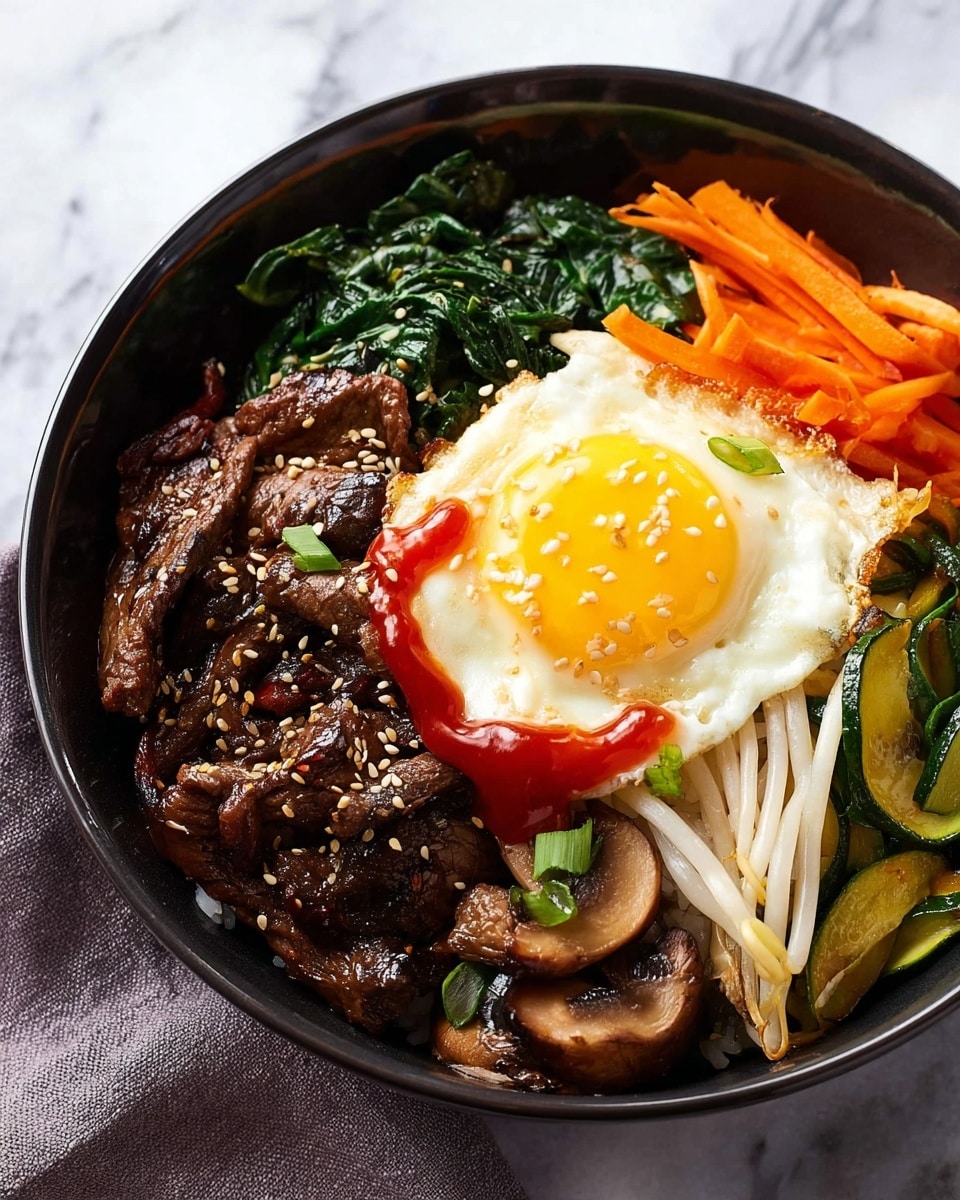
Bibimbap is a classic Korean dish that combines warm rice with sautéed vegetables, marinated beef, and a perfectly fried egg. It’s colorful, flavorful, and comes together in a deliciously balanced bowl. This recipe guides you through making each component for an authentic, satisfying meal.
Ingredients
- 4 cups cooked white rice, preferably short grain
- 4 eggs
- 2 tsp sesame seeds
- 250 g (8 oz) beef tenderloin or thick steak, very finely sliced
- 1/4 green apple, grated using a box grater
- 3 garlic cloves, minced
- 1 tsp minced ginger
- 1 tbsp soy sauce (light or all purpose)
- 1 tbsp honey or brown sugar
- 2 tsp toasted sesame oil
- 2 large carrots, cut into 5 x 0.5 cm batons
- 2 large zucchinis, cut into 5 x 0.5 cm batons
- 1 bunch of spinach, cut into 5 cm lengths
- 8 dried shiitake mushrooms, large
- 4 cups bean sprouts
- 2 tsp garlic, minced (about 3 cloves)
- 8 tsp vegetable oil (separated)
- 1/2 tsp salt
- 1.5 tsp soy sauce (light or all purpose)
- 1/4 tsp fish sauce (can substitute soy sauce)
- 1/4 tsp white sugar
- 4 tbsp gochujang paste
- 2 tbsp mirin
- 2 tbsp rice vinegar
- 1.5 tsp soy sauce
- 3 tsp white sugar
- 1 garlic clove, finely grated
- 2.5 tsp toasted sesame oil
Instructions
- Make Bibimbap Sauce: In a bowl, combine gochujang, mirin, rice vinegar, soy sauce, white sugar, grated garlic, and toasted sesame oil. Stir until the sugar dissolves completely. Set aside.
- Marinate Beef: Mix 1 tbsp soy sauce, honey, minced garlic, minced ginger, and 2 tsp toasted sesame oil in a bowl. Add the sliced beef and marinade for at least 30 minutes or up to overnight in the fridge.
- Cook Beef: Heat 2 tsp vegetable oil in a large skillet over high heat. Drain excess marinade from the beef before adding it to the pan. Cook for 3 to 4 minutes until browned and caramelized. Remove and keep warm.
- Prepare Vegetables: Soak dried shiitake mushrooms in boiling water for 30 minutes until rehydrated. Drain, squeeze out excess water, and slice thinly.
- Salt Carrots and Zucchinis (Optional): Place carrot and zucchini batons in separate bowls. Sprinkle each with 1/4 tsp salt and toss. Let sit for 20 minutes, then drain the liquid.
- Cook Vegetables: Use two skillets if possible. In one skillet, heat 2 tsp vegetable oil over medium-high heat and cook shiitake mushrooms for 2 minutes. Add 1.5 tsp soy sauce, 1/4 tsp sugar, and 1/2 tsp minced garlic, stir for 1 minute, then remove.
- In the second skillet, heat 2 tsp vegetable oil and cook carrots until just tender, about 5 to 8 minutes. Remove and repeat the same process to cook zucchini for about 4 minutes.
- Sauté Spinach: Heat 2 tsp vegetable oil with a splash of toasted sesame oil in a skillet. Add spinach and cook until it starts to wilt. Add 1/2 tsp minced garlic and salt to taste. Stir briefly, then remove. When cool, squeeze out excess liquid.
- Prepare Bean Sprouts: Simmer bean sprouts in water for 5 minutes or microwave steam for 3 minutes until floppy. Drain under cold water, cool, then squeeze out excess liquid. Toss with 2 tsp toasted sesame oil, 1 tsp minced garlic, and 1/4 tsp fish sauce.
- Fry Eggs: Fry eggs in a skillet to your liking—runny yolks are traditional and delicious.
- Assemble Bowls: Place warm rice in bowls. Arrange cooked vegetables and beef attractively on top, then add the fried egg last. Sprinkle with sesame seeds and drizzle with toasted sesame oil.
- Serve: Serve each bowl with the prepared Bibimbap sauce on the side or drizzled on top for that perfect balance of spicy, sweet, and savory flavors.
Tips & Variations
- Soaking shiitake mushrooms is essential to rehydrate and bring out their flavor.
- Salting carrots and zucchini helps draw out excess moisture, keeping your dish from becoming watery.
- Use leftover cooked meat or tofu as a vegetarian alternative.
- Gochujang paste may be spicy; adjust quantity according to your heat preference.
- Try mixing in kimchi for an extra tangy bite.
Storage
Store leftover components separately in airtight containers in the fridge for up to 2 days. Reheat rice and beef gently in a pan or microwave, and add fresh eggs when serving. Avoid storing the fried egg with the dish, as it’s best freshly cooked.
How to Serve
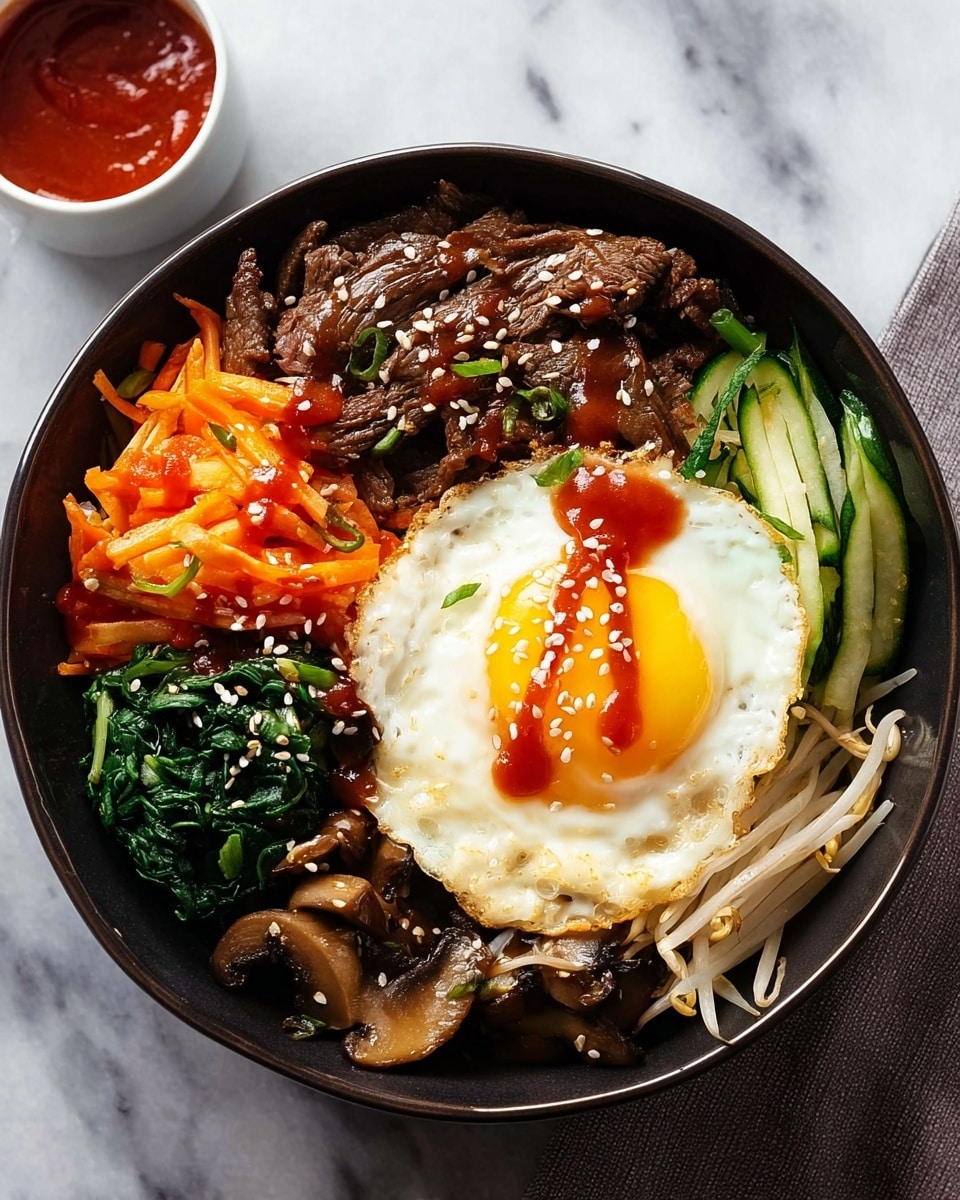
Serve this delicious recipe with your favorite sides.
FAQs
Can I use different vegetables in Bibimbap?
Absolutely. Feel free to substitute or add vegetables like mushrooms, cucumbers, radishes, or kale based on what you have on hand.
Is Bibimbap typically spicy?
The heat mostly comes from the gochujang sauce, which you can adjust to your taste. You can use less sauce or choose a milder variety if you prefer a gentler flavor.
Print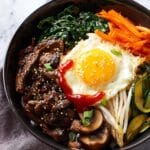
Classic Bibimbap with Marinated Beef and Assorted Vegetables Recipe
- Total Time: 1 hour 15 minutes
- Yield: 4 servings 1x
Description
This classic Korean Bibimbap recipe features a harmonious combination of marinated beef, sautéed vegetables, and a flavorful gochujang-based sauce served over warm short-grain white rice. Topped with a perfectly fried egg and toasted sesame seeds, this dish balances savory, sweet, and spicy elements for a satisfying and visually stunning meal.
Ingredients
Rice and Eggs
- 4 cups cooked white rice, preferably short grain
- 4 eggs
- 2 tsp sesame seeds
- Sesame oil, toasted (for drizzling)
Marinated Beef
- 250 g / 8 oz beef tenderloin or thick steak, very finely sliced
- 1/4 green apple, grated
- 3 garlic cloves, minced
- 1 tsp minced ginger
- 1 tbsp soy sauce (light or all purpose)
- 1 tbsp honey (or brown sugar)
- 2 tsp toasted sesame oil
Vegetables
- 2 large carrots, cut into 5 x 0.5 cm batons
- 2 large zucchini, cut into 5 x 0.5 cm batons
- 1 bunch spinach, cut into 5 cm lengths
- 8 dried shiitake mushrooms
- 4 cups bean sprouts
Vegetable Seasoning and Cooking
- 8 tsp vegetable oil, separated
- 1/2 tsp salt
- 1.5 tsp soy sauce (light or all purpose)
- 1/4 tsp fish sauce (or soy sauce as substitute)
- 1/4 tsp white sugar
- 2 tsp garlic, minced (about 3 cloves)
- Additional toasted sesame oil as needed
Bibimbap Sauce
- 4 tbsp gochujang paste
- 2 tbsp mirin
- 2 tbsp rice vinegar
- 1.5 tsp soy sauce
- 3 tsp white sugar
- 1 garlic clove, finely grated
- 2.5 tsp toasted sesame oil
Instructions
- Prepare Bibimbap Sauce: In a bowl, combine the gochujang paste, mirin, rice vinegar, soy sauce, white sugar, finely grated garlic, and toasted sesame oil. Mix well until the sugar is fully dissolved and the sauce is smooth. Set aside.
- Marinate Beef: Mix together grated green apple, minced garlic, minced ginger, soy sauce, honey, and toasted sesame oil in a bowl to create the marinade. Add finely sliced beef to the marinade, ensuring all pieces are coated. Cover and refrigerate for at least 30 minutes or up to overnight for deeper flavor.
- Cook Beef: Heat 2 teaspoons of vegetable oil in a large skillet over high heat. Shake off excess marinade from beef and add to the skillet. Cook for 3 to 4 minutes until the beef is cooked through and caramelized in spots. Remove beef from skillet and keep warm.
- Rehydrate Shiitake Mushrooms: Place dried shiitake mushrooms in a large bowl of boiling water and soak for 30 minutes until soft. Drain, squeeze out excess water, and slice thinly.
- Salt Carrots and Zucchini (optional): Place carrot and zucchini batons in separate bowls and sprinkle each with 1/4 teaspoon salt. Toss and let sit for 20 minutes to draw out moisture, then drain excess liquid.
- Cook Vegetables: If possible, use two skillets. In one skillet over medium-high heat, heat 2 teaspoons oil and cook sliced shiitake mushrooms for 2 minutes. Add 1.5 teaspoons soy sauce, 1/4 teaspoon sugar, and 1/2 teaspoon minced garlic. Stir for 1 minute, then remove from heat.
In the second skillet, heat 2 teaspoons oil and sauté carrots until just tender, about 5 to 8 minutes. Remove.
Cook zucchini similarly for about 4 minutes until tender. Remove.
Heat 2 teaspoons vegetable oil with a splash of toasted sesame oil in a skillet. Sauté spinach until it just starts to wilt. Add 1/2 teaspoon garlic and salt to taste, stir briefly, then remove. Once cool, squeeze out excess liquid.
Simmer bean sprouts in water for 5 minutes or steam in microwave for 3 minutes until soft. Drain, rinse in cold water, then squeeze out excess liquid. Toss with 2 teaspoons toasted sesame oil, 1 teaspoon minced garlic, and 1/4 teaspoon fish sauce. - Fry Eggs: In a skillet, fry eggs to your preferred doneness; traditionally, a runny yolk is favored.
- Assemble Bibimbap: Place warm cooked rice in individual bowls. Arrange cooked vegetables and marinated beef artistically on top of the rice. Place the fried egg on top of the bowl. Sprinkle with toasted sesame seeds and drizzle with additional toasted sesame oil. Serve with the prepared Bibimbap sauce on the side for mixing in.
Notes
- Note 1: Short grain rice is preferred for its sticky texture which holds the Bibimbap ingredients well.
- Note 2: Very finely sliced beef ensures quick, even cooking and tender texture.
- Note 3: The grated green apple tenderizes the beef and adds natural sweetness.
- Note 4: Light soy sauce is preferred for a balanced saltiness without overpowering flavor.
- Note 5: Use large dried shiitake mushrooms for better texture and flavor.
- Note 6: Gochujang paste is a spicy Korean chili paste that provides signature heat and depth.
- Note 7: Mirin is a sweet rice wine; alternatively, use a mild sweet cooking wine.
- Note 8: Rice vinegar is milder than white vinegar; it balances the sauce’s acidity.
- Note 9: Toasted sesame oil is used for its rich nutty aroma and flavor.
- Note 10: Salting carrots and zucchini and draining liquids is optional to prevent the dish from being watery and enhances texture.
- Prep Time: 45 minutes
- Cook Time: 30 minutes
- Category: Main Course
- Method: Stovetop
- Cuisine: Korean
Keywords: Bibimbap, Korean rice bowl, beef bibimbap, vegetable bibimbap, gochujang, Korean recipe, marinated beef, sautéed vegetables, fried egg