
Simple Fermented Kimchi Recipe
Introduction
Kimchi is a traditional Korean fermented side dish that brings a vibrant, tangy flavor to your meals. This simple fermented kimchi recipe is easy to make at home using fresh vegetables and basic ingredients, providing a delicious and healthy addition to any table.
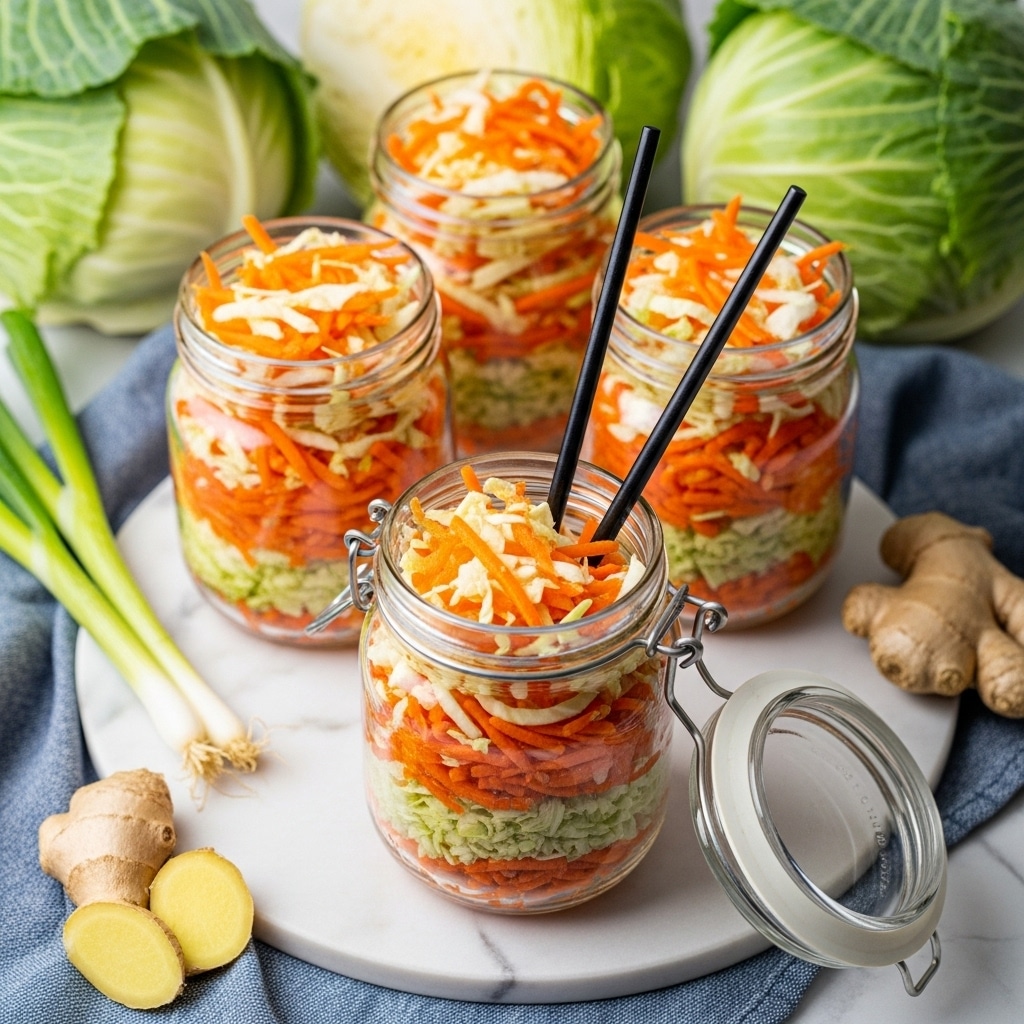
Ingredients
- 1 pound Napa Cabbage
- 1 Carrot
- 1 bunch Scallion
- Fresh Ginger, to taste
- 1/2 teaspoon Cayenne Pepper
- 1 clove Garlic
- 1 liter Water
- 3 tablespoon Sea Salt
Instructions
- Step 1: Make the brine by dissolving 3 tablespoons of natural sea salt in 1 liter of filtered water.
- Step 2: Wash and dry the Napa cabbage, then slice it into 1 inch pieces.
- Step 3: Place the cabbage in a large mixing bowl and pour the brine over it, using a ceramic plate to weigh it down. Let it soak under the brine for 30 minutes.
- Step 4: While the cabbage soaks, wash your jar thoroughly with hot water and vinegar, then let it air dry on a clean tea towel.
- Step 5: Peel and grate the carrot, finely slice the scallions, julienne the fresh ginger, and thinly slice the garlic clove.
- Step 6: After soaking, pour the brine from the cabbage into the jar and set it aside. Add the prepared carrots, ginger, scallions, and 1/2 teaspoon of cayenne pepper to the cabbage and mix thoroughly.
- Step 7: Massage and bruise the cabbage mixture with your hands for about five minutes to release the juices.
- Step 8: Pack the kimchi mixture tightly into the glass jar, pressing down firmly with your fist to remove air bubbles. Pour in all the juices from the mixing bowl and press down again.
- Step 9: Roll up two large outer leaves of cabbage and place them on top of the mixture to keep the vegetables submerged under the brine. Store the jar out of direct sunlight for at least 3 days in warm climates or 5-7 days in colder climates.
- Step 10: Taste the kimchi using clean utensils when fermentation time is up. It should be sour and tangy. If not, close the jar and leave it for 2-3 more days. Enjoy!
Tips & Variations
- For a milder flavor, reduce the cayenne pepper or omit it entirely.
- Use a glass jar to avoid reaction with the salty brine and ensure proper fermentation.
- Experiment by adding other vegetables like daikon radish or green beans for extra texture.
- Keep everything, especially your hands and utensils, very clean to avoid unwanted bacteria during fermentation.
Storage
Store the fermented kimchi in the refrigerator once it reaches your desired tanginess. It will keep well for up to 4 weeks. The flavor will continue to develop and become more sour over time. Use clean utensils when serving to maintain freshness.
How to Serve
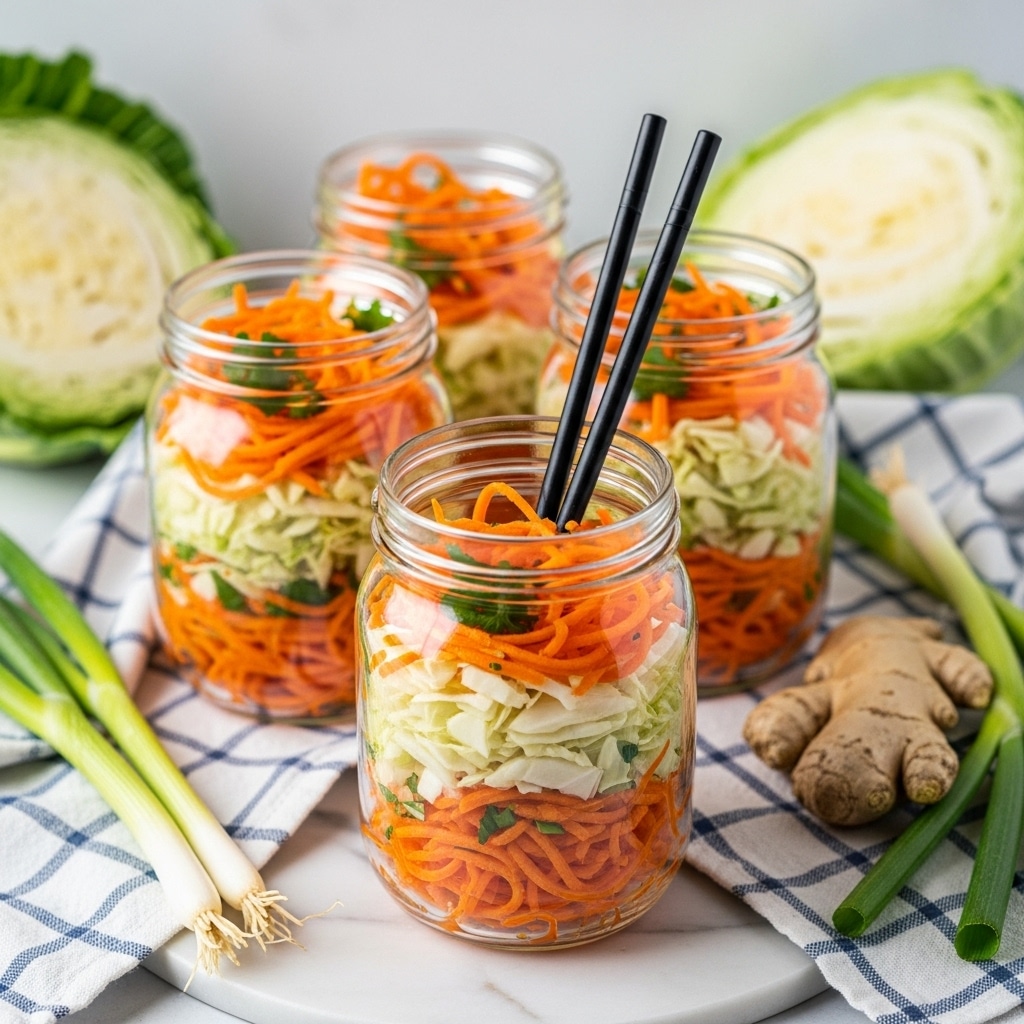
Serve this delicious recipe with your favorite sides.
FAQs
Can I use table salt instead of sea salt for the brine?
While table salt can be used, sea salt is preferred because it lacks additives that can interfere with fermentation. If using table salt, choose one without iodine or anti-caking agents.
How do I know when my kimchi is ready to eat?
The kimchi is ready when it tastes sour and tangy, typically after 3-7 days depending on ambient temperature. If it still tastes bland, allow it to ferment longer and taste periodically.
Print
Simple Fermented Kimchi Recipe
- Total Time: 3 to 10 days (including fermentation)
- Yield: Approximately 1 quart of kimchi 1x
- Diet: Vegetarian
Description
This Simple Fermented Kimchi recipe offers a traditional and easy method to make your own homemade kimchi using Napa cabbage and a flavorful mix of fresh vegetables and spices. The fermentation produces a tangy, probiotic-rich Korean classic that’s perfect as a side dish or condiment, boasting natural probiotics and vibrant flavors without any complicated steps or equipment.
Ingredients
Vegetables
- 1 pound Napa Cabbage
- 1 Carrot
- 1 bunch Scallion
- Fresh Ginger, to taste
- 1 clove Garlic
Brine & Seasonings
- 1 liter Water
- 3 tablespoons Sea Salt
- 1/2 teaspoon Cayenne Pepper
Instructions
- Make the brine: Dissolve 3 tablespoons of natural sea salt in 1 liter of filtered water to create a brine solution that will help ferment and preserve the vegetables.
- Prepare the cabbage: Wash and dry the Napa cabbage thoroughly, then chop it into 1-inch pieces to ensure even fermentation and flavor absorption.
- Brine the cabbage: Place the chopped cabbage in a large mixing bowl and pour the brine over it. Use a ceramic plate to weigh the cabbage down under the brine and let it soak for 30 minutes.
- Prepare the jar: Clean your fermentation jar by washing it with hot water and vinegar, then allow it to air dry on a clean tea towel to prevent unwanted bacteria.
- Prepare the vegetables: Peel and grate the carrot, finely slice the scallions, peel and julienne the fresh ginger, and thinly slice the garlic for a balanced flavor profile.
- Combine ingredients: After the cabbage has soaked, pour the brine into the jar but reserve some for later use. Add the grated carrots, ginger, scallions, and cayenne pepper to the cabbage and mix well to distribute flavors evenly.
- Massage the mixture: Using your hands, massage and bruise the cabbage mixture for about five minutes to release natural juices that aid in fermentation.
- Pack the jar: Transfer the kimchi mixture into the clean glass jar, packing it down firmly with your fist to eliminate air bubbles. Pour in all the juices from the mixing bowl and press the vegetables down again.
- Submerge the vegetables: Roll up two large outer leaves of cabbage and place them on top of the mixture to keep the vegetables submerged under the brine, preventing mold growth.
- Ferment: Place the jar out of direct sunlight and allow the kimchi to ferment at room temperature for at least 3 days in warm climates or 5-7 days in cooler climates.
- Check readiness: After the fermentation period, taste the kimchi using clean utensils. It should be sour and tangy. If not, reseal the jar and allow it to ferment for an additional 2-3 days. Once ready, enjoy your homemade kimchi!
Notes
- Ensure all utensils and jars are thoroughly cleaned to prevent contamination.
- Use filtered or purified water for the brine to avoid chlorine or chemicals that could inhibit fermentation.
- The fermentation time varies based on climate; warmer environments speed up the process.
- Store the kimchi in the refrigerator after fermentation to slow down further souring.
- Do not use metal containers for fermentation as they can react with the acidic kimchi.
- Use clean utensils every time to avoid introducing unwanted bacteria during tasting.
- Prep Time: 20 minutes
- Cook Time: 0 minutes
- Category: Side Dish
- Method: No-Cook
- Cuisine: Korean
Keywords: kimchi, fermented vegetables, Korean recipe, Napa cabbage, probiotic, homemade kimchi, easy kimchi