Perfectly Tender French Duck Confit Recipe
Introduction
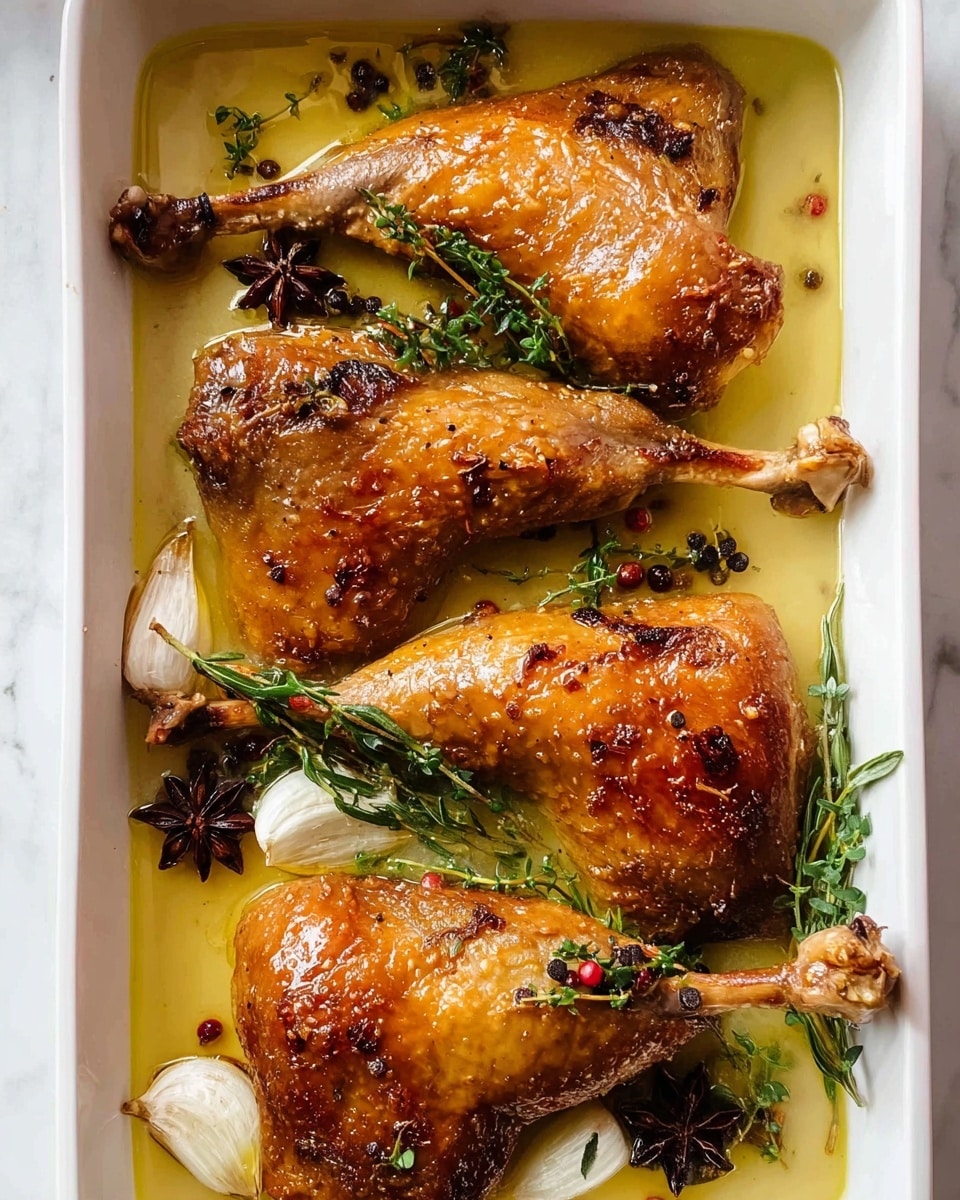
Duck confit is a timeless French dish featuring slow-cooked duck legs in their own fat until tender and flavorful. The process may take time, but the result is rich, succulent meat with irresistibly crispy skin. Perfect for a special meal or impressing guests.
Ingredients
- 4 duck legs, 250g (8oz) each, skin on, bone in
- 750 ml (25 oz) duck fat
- 4 tsp kosher salt
- 1/3 cup thyme sprigs, lightly packed
- 1/3 cup sage sprigs, lightly packed
- 1/3 cup rosemary sprigs, lightly packed
- 1/3 cup oregano sprigs, lightly packed
- 6 cloves garlic, smashed with skin on
- 1 eschalot (shallot), peeled and sliced 0.7cm (1/3″) thick
- 1 tbsp black peppercorns
- 1 tbsp coriander seeds
- 8 star anise
- 2 bay leaves
- 2 tbsp juniper berries
- 8 cloves
Instructions
- Step 1: Coat duck legs with the salt and herb mixture, tossing thoroughly in a large bowl to cover them evenly.
- Step 2: Arrange the duck legs in a single snug layer in a glass or ceramic dish. Cover and refrigerate for 12 to 24 hours to cure.
- Step 3: After curing, brush off excess salt and herbs, then rinse duck legs under cold water. Pat dry very well with paper towels.
- Step 4: Preheat oven to 100°C (210°F) or 80°C fan, with a rack in the middle position.
- Step 5: Place the duck legs in a metal roasting pan with high sides in a single layer, fitting snugly together.
- Step 6: Pour the duck fat over the legs until they are fully submerged.
- Step 7: Heat the pan on the stove over medium-high until the fat bubbles vigorously across the surface.
- Step 8: Turn off heat. Cover the fat surface with parchment paper pushed down gently to remove air bubbles, then seal the pan tightly with double foil.
- Step 9: Transfer the pan to the oven and slow cook for 8 hours until the meat is fall-apart tender.
- Step 10: Remove one leg carefully and check tenderness. The meat should pull away easily and the joint should bend with little resistance.
- Step 11: To store, remove duck legs and strain off juice. Place meat in a non-reactive container and cover fully with cooled duck fat. Refrigerate covered for up to 5 days or freeze up to 3 months.
- Step 12: To crisp skin, preheat oven to 240°C (465°F) or 220°C fan. Place a rack over a roasting pan with 2.5cm (1 inch) boiling water for moisture.
- Step 13: Remove duck from fat, pat dry, and place skin side up on the rack. Roast for 40 minutes until skin is deep golden and crispy, rotating for even color.
- Step 14: Let rest briefly, then serve. Lentil ragout makes a classic French accompaniment.
Tips & Variations
- Use fresh herbs for the most aromatic flavor, or substitute dried herbs if fresh aren’t available (use one-third the quantity).
- Ensure the duck legs are fully submerged in fat during cooking and storage to keep them moist and preserve flavor.
- For added depth, add a splash of white wine or brandy to the fat before cooking.
- If you don’t have duck fat, high-quality goose fat or clarified butter can be used as a substitute.
Storage
Store cooked duck confit submerged in fat in a sealed non-reactive container in the refrigerator for up to 5 days. For longer storage, freeze covered in fat for up to 3 months. To reheat, gently melt the fat in the microwave or warm oven before finishing with the high-heat crisping step.
How to Serve
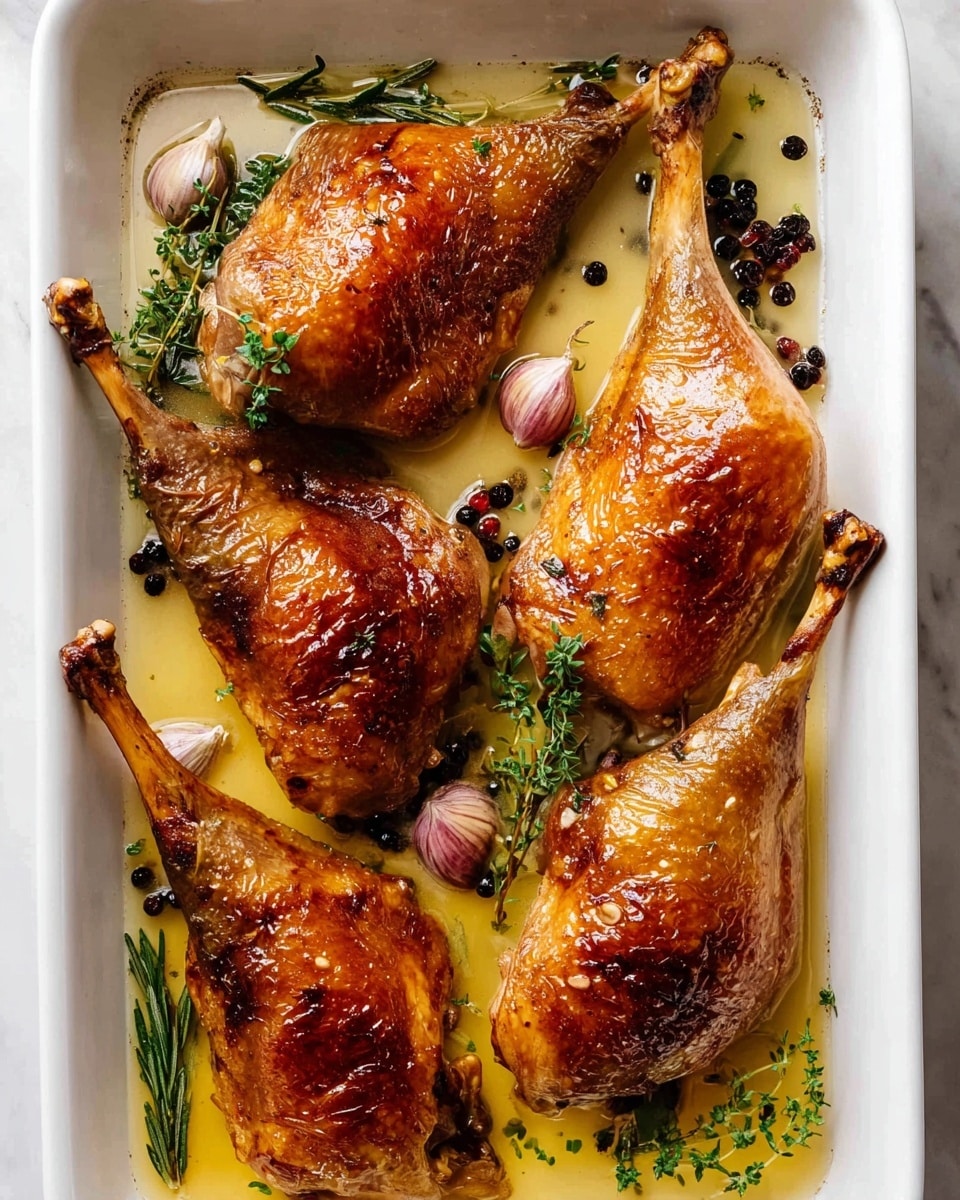
Serve this delicious recipe with your favorite sides.
FAQs
Can I use chicken instead of duck for confit?
While chicken can be cooked confit style, duck legs have more fat which makes the dish richer and more traditional. Chicken confit will be leaner and may require additional fat for cooking.
Is it necessary to cure the duck before cooking?
Curing with salt and herbs helps season the meat deeply and improves texture by drawing out moisture. It is a crucial step for authentic flavor and tender results.
Print
Perfectly Tender French Duck Confit Recipe
- Total Time: 8 hours 1 hour (plus 12-24 hours curing)
- Yield: 4 servings 1x
Description
Duck Confit is a classic French dish featuring slow-roasted duck legs cured in salt and herbs, then cooked slowly in duck fat until meltingly tender. The duck is finished by roasting to crisp the skin perfectly, delivering rich, savory flavors with tender meat and crispy skin. This traditional method involves curing, slow roasting, and finishing in the oven, resulting in a luxurious and flavorful dish often served with lentil ragout or roasted vegetables.
Ingredients
Duck Legs and Cure
- 4 x 250g / 8oz duck legs, skin on, bone in (aka maryland)
- 4 tsp cooking/kosher salt
- 6 cloves garlic, smashed with skin on
- 1 eschalot (shallot), peeled and sliced 0.7cm (1/3″) thick
- 1 tbsp black peppercorns
- 1 tbsp coriander seeds
- 8 star anise
- 2 bay leaves
- 2 tbsp juniper berries
- 8 cloves
Herbs
- 1/3 cup thyme sprigs, lightly packed
- 1/3 cup sage sprigs, lightly packed
- 1/3 cup rosemary sprigs, lightly packed
- 1/3 cup oregano sprigs, lightly packed
Cooking Fat
- 750 ml / 25 oz duck fat
Instructions
- Cure duck: Place the duck legs and all dry cure ingredients (salt, herbs, garlic, shallot, spices) into a large bowl and toss well by hand to coat evenly.
- Cure 12 – 24 hrs: Transfer the coated duck legs to a ceramic or glass dish so they fit in a single snug layer, cover, and refrigerate for 12 to 24 hours to allow curing.
- Rinse the duck: After curing, brush off the cure residue and rinse the duck legs under tap water to remove all salt and any remaining bits. Pat dry thoroughly with paper towels.
- Preheat oven: Set oven to 100°C (210°F) or 80°C (175°F) with fan on, and position rack in the middle.
- Arrange duck legs: Place the duck legs in a small metal roasting pan with high sides in a single snug layer, touching but not overlapping.
- Cover with duck fat: Pour the duck fat over the legs so they are fully submerged.
- Heat fat before cooking: Place the roasting pan on the stove over medium-high heat and heat the fat until it bubbles energetically across the surface, ensuring even heat.
- Cover the fat surface: Turn off heat. Cover the fat surface directly with parchment paper cut to size, gently pressing down to remove air bubbles, then seal the pan tightly with a double layer of aluminum foil.
- Slow cook: Transfer the sealed pan carefully to the oven and cook slowly for 8 hours until the meat is very tender and easily yields to pressure.
- Check doneness: Carefully remove one duck leg, turn it over, and test that the flesh is fall-apart tender and the joint gives easily when pressed.
- Store duck confit (optional): Strain any meat juices. Transfer duck legs to a non-reactive container, cover completely with cooled duck fat, and refrigerate for up to 5 days or freeze for up to 3 months with fat solidified on top.
- Heat before finishing: To cook after storage, gently warm the duck in the microwave to melt the fat, then proceed to crisping skin.
- Preheat oven for finishing: Set oven to 240°C (465°F) or 220°C (425°F) fan, and place a rack over a deep roasting pan.
- Prepare duck for roasting: Remove duck legs from fat, letting excess drip off and patting dry. Pour one inch (2.5cm) boiling water into roasting pan to keep meat moist with steam.
- Crisp skin: Place duck legs skin side up on rack and roast for 40 minutes, rotating pan if necessary, until skin is deep golden and crispy without smoking.
- Serve: Allow duck to rest briefly after roasting and serve warm. Perfectly paired with classic sides like lentil ragout.
Notes
- Note 1: Duck legs should be skin on and bone in for best flavor.
- Note 2: Use high-quality duck fat for authentic cooking and superior taste.
- Note 4: Kosher salt is preferred for even seasoning and curing.
- Note 5: Use a roasting pan with high sides to ensure duck legs are well covered with fat.
- Note 6: Make sure duck legs are fully submerged under the fat for proper confit cooking.
- Note 7: Use a non-reactive container such as glass or ceramic for storing duck confit in fat to avoid metallic flavors.
- Prep Time: 20 minutes (plus 12-24 hours curing time)
- Cook Time: 8 hours slow cooking + 40 minutes roasting
- Category: Main Course
- Method: Slow Cooking
- Cuisine: French
Keywords: Duck Confit, French Duck, Slow Roasted Duck, Duck Legs, Classic French Recipe, Confit Duck